Build Your Website & Marketing with AI (any level of tech)
What you learn from customers this week should improve your marketing next week.AI and DIY tools make creating a website, Google Business Profile content, and social posts more affordable than ever. But you can’t set and forget your marketing—and the missed sales opportunities can cost far more than you saved building it.
We’ll show you how we use business expertise, customer insights, and AI tools to build a marketing foundation and continually improve the marketing around it.
Whether you’re doing it yourself or hiring someone, the same steps apply.
Build with AI. Lead with your expertise.
See exactly how we put these steps into practice.
You don’t have to figure out the entire process yourself.
We’ll walk through how Quick Square approaches each of the five steps below. We’ll explain the tools we use, the information we gather, and the decisions that connect your strategy to your website and marketing.
For example, we’ll show how we gather your knowledge through a business interview, organize it into a marketing foundation, and use that foundation to guide content creation with AI.
You can apply the process yourself, share the responsibilities with your team, or use it to give a marketing provider clearer direction.
Understand your customers
Build your marketing foundation before you build your content.
What problems bring customers to your business? What outcomes do they want? What makes your services a good fit—and why should they choose you?
We’ll explain our process for drawing those answers out of your experience and customer conversations. Then we’ll show how we organize them into a marketing foundation that defines your audience, value proposition, core messages, and calls to action.
That foundation gives AI meaningful information to work with. We’ll explain how to check its output against your experience, challenge generic suggestions, and keep the message grounded in what your business actually delivers.

Understand your market
Know where you fit and how you’ll evaluate progress.
Your customers have alternatives. Understanding those alternatives helps you explain your value and decide where to focus your marketing.
We’ll show how we examine competitors, review local search visibility, and look for gaps in how a business presents its services.
We’ll also explain how we establish a starting point and choose useful measures—from local rankings to inquiries, appointments, and sales—so you can evaluate whether your efforts are helping.
The goal is a repeatable way to assess your market, learn from the response, and adjust your strategy.
Keep your marketing moving
Turn what happens in your business into ongoing improvements.
Every week, customers ask questions, projects produce results, and conversations reveal what helps people make decisions.
We’ll show how we turn that knowledge into landing pages, expert answers, customer stories, and improvements to existing messages and offers.
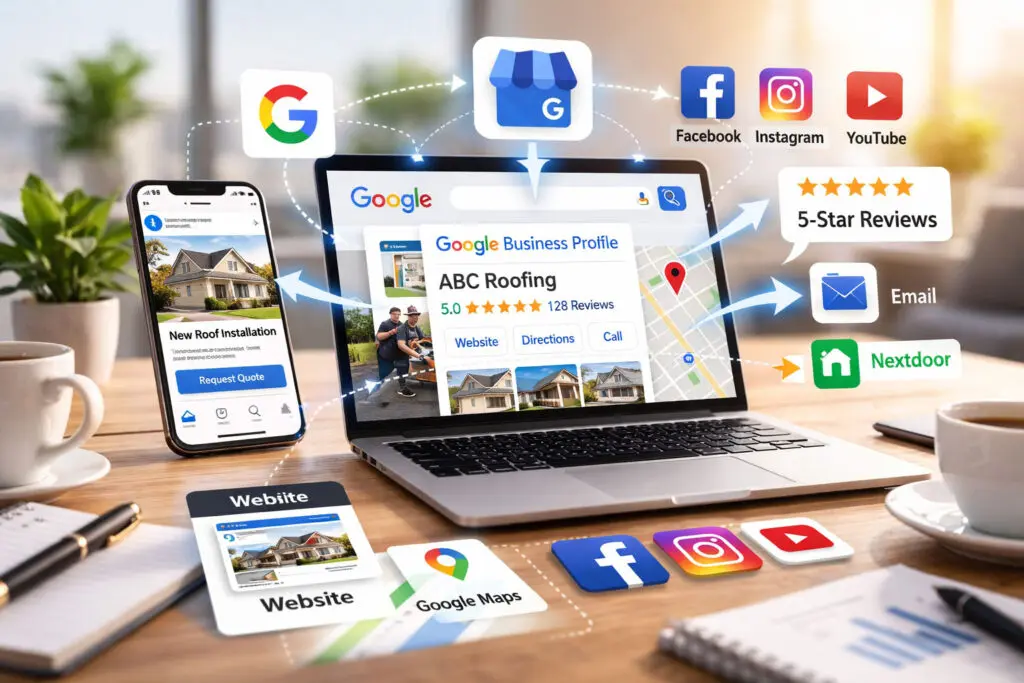
We’ll explain how we organize the work, use AI to help prepare content, and connect publishing across your website, Google Business Profile, social media, and email.
You’ll also see how we establish responsibilities and review points. Doing everything yourself competes with running your company. Paying someone for every change can become expensive. Your process needs to fit the time, skills, and support available to you.

Establish trust
Make your business clear and consistent wherever customers find you.
Customers need to understand who you are, what you do, why they should trust you, and how to contact you.
We’ll explain how we check business details and core messages across websites, Google Business Profiles, social accounts, and directory listings.
That includes your business name, appropriate address or service-area information, phone number, professional email, brand identity, and descriptions of your services.
We’ll show how we identify inconsistencies, prioritize corrections, and assign responsibility for keeping those details current.
Protect your business and customers
Include privacy, accessibility, and security in the process.
Building a working website is only one part of managing it responsibly.
We’ll explain how we identify the privacy, consent, accessibility, legal, and security questions a business needs to address—and where qualified professional guidance may be needed.
Topics include website policies, cookies and tracking, email and text-message permissions, form spam, customer data, account access, and website protection, payments, integrations.
We’ll walk through how we assess these concerns, identify who is responsible, and include appropriate checks as the website and marketing change.